
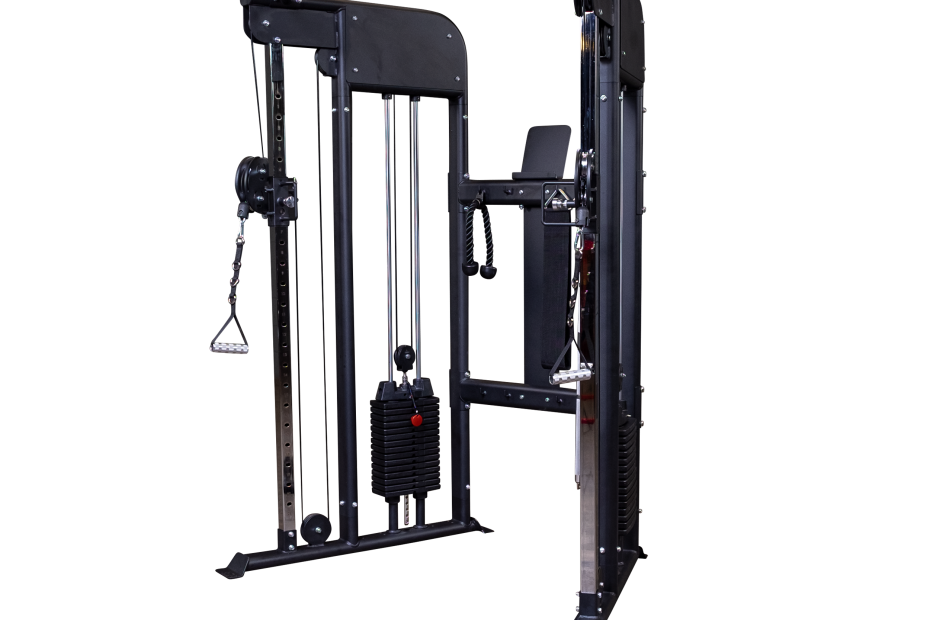
A functional trainer can be one of the most versatile pieces of strength equipment you can put in a home gym. And it can also be a significant investment. Once you’re spending $1,500, $2,000 or more on a strength machine, you want to know that it will actually give you enough exercise variety, resistance, durability, and room to progress to justify both the price and the space it takes up.
As a Personal Trainer and Health Coach with more than 20 years of experience working with women, I want to know:
- Is it versatile enough that you can you train your whole body with various exercises?
- Is it easy to use so you can optimize your workouts?
- Is it designed for a woman’s resistance training goals?
- Can you adjust the machine to suit different movements?
- Does it provide high-quality, durability, and a reasonable warranty?
- Is it really practical and realistic for home use?
For many women, a well-designed functional trainer can tick all of those boxes, and that is why the Body-Solid GFT100 is my top pick. If you’re looking for the best functional trainer for women, these are the features I think matter most before you buy.
What Is a Functional Trainer?
A functional trainer is a cable-based strength machine that typically uses one or two adjustable pulleys connected to selectorized weight stacks. Unlike many traditional home gyms, where each station has a fairly fixed path of movement, a functional trainer gives you much more freedom to change:
- Pulley height
- Cable angle
- Body position
- Exercise direction
- Left and right-side movement
- Resistance
That flexibility is what allows one machine to be used for such a wide range of exercises. Depending on the design, you can perform pressing, pulling, arm, shoulder, lower-body and core exercises without needing a separate machine for every movement.
Look for Adjustable Pulleys
This is one of the most important things I would look for. A functional trainer becomes much more useful when the pulleys can be repositioned at different heights.
That allows you to set the cable:
- High for pulling and downward movements
- Around chest or shoulder height for presses and rows
- Low for lower-body movements, curls and other exercises
- At different intermediate positions for different movement angles
The Body-Solid GFT100, for example, uses two fully adjustable swiveling pulleys, which is one of the main reasons I selected it for the Tenacity Fitness store. The more freedom you have to position the cable appropriately, the more exercises you can realistically perform.
Dual Weight Stacks Give You More Flexibility
Some cable machines use one central weight stack. Others use two independent stacks. For a serious functional trainer, I strongly prefer the flexibility of two separate weight stacks, because that allows each side of the machine to operate independently.
You can therefore perform:
- Two-arm movements
- One-arm movements
- Alternating exercises
- Left/right independent training
- Exercises requiring cables from both sides simultaneously
A dual-stack system supports isolated, compound, bilateral, unilateral movements and balanced training. That gives you much more workout freedom than a machine where both sides are always tied to the same movement.
Understand the Resistance Ratio
This is something many buyers overlook. The number printed on the weight stack does not always equal the resistance you feel at the handle. Functional trainers commonly use pulley systems that alter the effective resistance.
A 1:2 stack-to-resistance ratio allows for smaller incremental weight adjustments and a greater range of motion. You don’t always need to make a huge increase to progress, and with strength training, it’s not realistic to make large increases in weight every week. A small increase in resistance is exactly what you need to keep moving forward while maintaining good exercise technique.
Make Sure There Is Enough Resistance to Grow With You
The machine should not only suit your current strength level, it should leave room for progression. That is an important feature if you want a machine that can remain useful as you become considerably stronger. So be sure to check the total weight stack so you know the maximum resistance.
Look at the Frame Construction
Once you move into premium strength equipment, I want to see substantial construction. It is important to choose a high-quality durable machine as these can last a lifetime – just as your resistance workouts should.
Measure Your Space Before Buying
Functional trainers can look surprisingly compact in online photographs. Always check the actual measurements. Remember to measure your ceiling. Also leave working space around the machine. You may need to step forward, backward or sideways when performing exercises, so the machine’s physical footprint is not the only space you need.
Included Attachments Matter
A cable machine is only as useful as the exercises you can perform with it. You can always buy additional cable attachments later, but I like machines that include a useful selection from the start.
An Integrated Pull-Up Bar Is a Useful Bonus
Some functional trainers include a pull-up bar to offer another type of training without requiring a separate pull-up station. This can be used for pull-ups, chin-ups and hanging core exercises. Even if you cannot perform a full pull-up yet, it is useful to have the option available as your strength develops.
Think About Exercise Variety
This is where functional trainers really stand out. A good cable machine can be used for exercises targeting:
Chest
Cable presses
Cable flyes
Back
Rows
Pulling movements
Shoulders
Raises
Pressing movements
Rear-shoulder exercises
Arms
Biceps curls
Triceps pressdowns
Triceps extensions
Lower Body
Squats
Lunges
Glute-focused cable movements
Other lower-body cable exercises
Core
Rotational movements
Anti-rotation exercises
Standing cable exercises
The value comes from being able to reposition the cable and your body rather than being locked into one movement path.
Consider Whether You Prefer Freedom or Guidance
This is an important distinction. A functional trainer gives you more freedom. A traditional multi-gym gives you more guidance. A multigym usually has dedicated stations and more predetermined exercise paths. That can be appealing if you want to sit down and immediately know exactly where and how to perform each movement.
A functional trainer, on the other hand, offers more versatility and gives you much more freedom to create exercises from different positions and angles.
Why Choose A Functional Trainer?
This is one of the best options you can choose if you are serious about maintaining a well-round resistance training routine from home.
Choose a functional trainer if:
- You want lots of exercise variety
- You enjoy cable exercises
- You want independent left/right movement
- You like changing exercise angles
- You want equipment that can support more advanced programming
- You want a full-body workout with a variety of movements
Why Strength Training Matters for Women as We Get Older
Strength training is valuable throughout adulthood, but maintaining muscle and physical strength becomes increasingly important as we age. Resistance exercise can help support the ability to perform everyday tasks, maintain physical capability and continue doing the activities we enjoy.
For women moving through their 40s, 50s, 60s and later years, resistance training becomes essential in order to maintain lean muscle and protect bones and joints from osteoporosis. If you want a serious home strength setup and know you will use it, a machine that offers a large variety of exercises can be an excellent long-term investment for your health, fitness, and wellness.
My Pick: Body-Solid GFT100 Functional Trainer
The functional trainer I currently recommend and carry through Tenacity Fitness is the Body-Solid GFT100 Functional Trainer.
What attracted me to it is the combination of:
- Dual 160 lb stacks
- Fully adjustable swiveling pulleys
- 1:2 resistance ratio
- Heavy-duty 11-gauge construction
- Included attachments
- Integrated chinning bar
- Expandable weight stacks
- Relatively space-efficient footprint
- Strong residential warranty
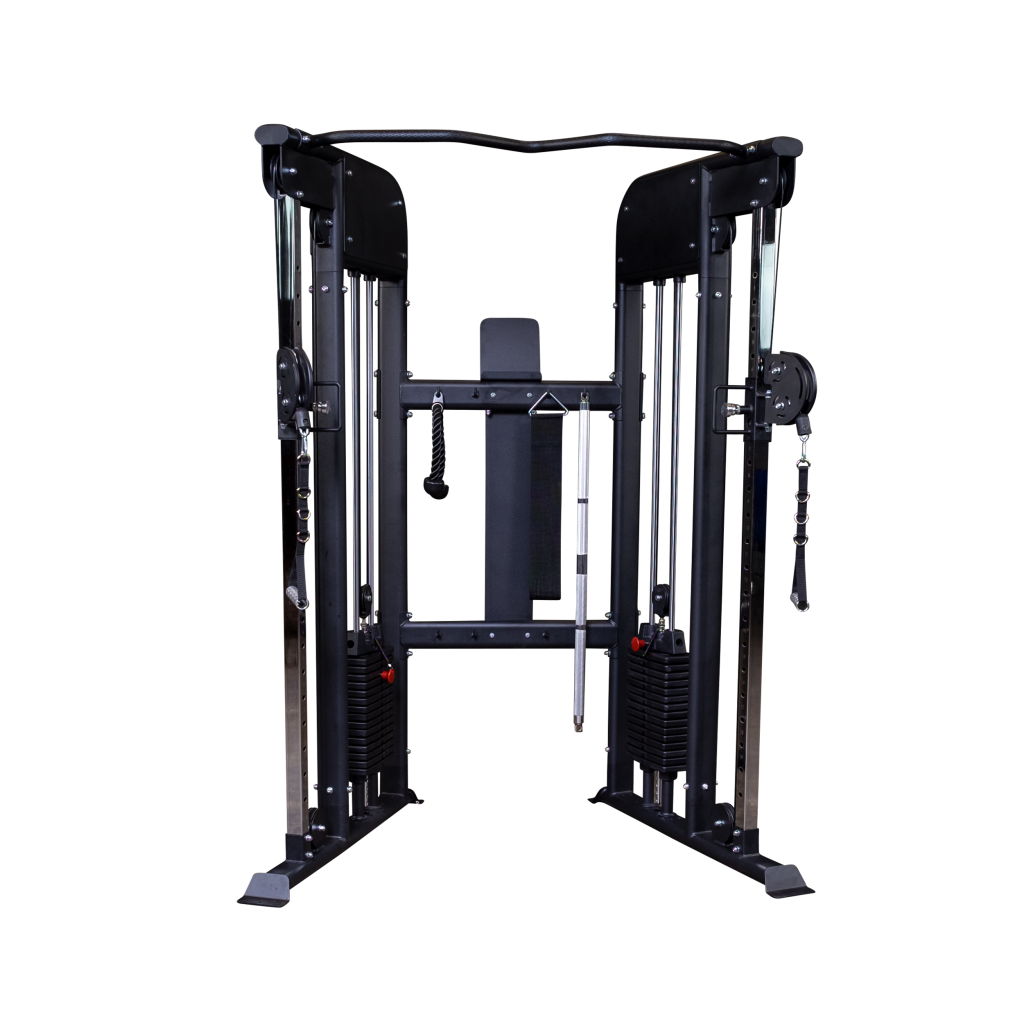
Body-Solid also backs the GFT100 with lifetime in-home coverage on the frame and welds, bushings and hardware, and pads, cables and grips. So you can buy with confidence and peace-of-mind.
SHOP THE BODY-SOLID GFT100 FUNCTIONAL TRAINER
Is a Functional Trainer Worth the Investment?
That depends on how you intend to train. If you only strength train occasionally and are perfectly happy with a few dumbbells and resistance bands, you probably don’t need a $2,000 machine.
But if you:
- Want to train consistently at home
- Want more versatility and gym-style workouts at home
- Want a large exercise library from one machine
- Want progressive resistance
- Want independent cable movement
- Prefer not to buy numerous individual machines
- Have enough permanent space
then a good functional trainer can earn its place in your home for many years.
Not sure whether a functional trainer is the right type of machine for you? My Functional Trainer vs Home Gym for Women guide compares the two training styles side by side
Want Help Getting Started With Strength Training?
If you’re interested in building strength at home but aren’t sure where to start, download my free midlife strength starter guide for women.
It gives you a straightforward introduction to resistance training and a simple structure you can begin using at home.
GET THE FREE MIDLIFE STRENGTH STARTER GUIDE FOR WOMEN
Frequently Asked Questions
What is the best functional trainer for women?
There is no single machine that is best for every woman. Look for adjustable pulleys, sufficient resistance, independent cable movement, solid construction and enough exercise variety to match your training goals.
Is a functional trainer good for beginners?
Yes. Adjustable resistance makes functional trainers suitable for beginners as well as more experienced users.
Can you train your whole body on a functional trainer?
Yes. A functional trainer can be used for upper-body, lower-body and core exercises depending on the cable positions and attachments available.
What is the difference between a functional trainer and a home gym?
A traditional home gym usually uses more fixed exercise stations. A functional trainer uses adjustable cables that offer greater freedom of movement and exercise variety.
Are two weight stacks better than one?
Two independent stacks provide more flexibility because each side can be used independently or both can be used together.