

By Caroline Gladwin, Certified Personal Trainer & Health Coach
As women move through their 40s, 50s and beyond, maintaining strength, muscle, bone health, energy and overall wellbeing often becomes much more of a priority. For many of us, this stage also coincides with perimenopause and menopause – a time when sleep, recovery and the way our bodies respond to exercise may not always feel quite as predictable as they once did.
One nutrient that receives a lot of attention during midlife is magnesium. And increasingly, women are specifically searching for magnesium glycinate. But what exactly is magnesium glycinate? What does magnesium actually do in the body? Is it really helpful for sleep? And does every woman over 40 need to take a magnesium supplement?
As a women’s Personal Trainer and Health Coach in midlife myself and who has worked with women for more than 20 years, I believe supplements should complement the foundations of good health, not replace them. Strength training, movement, good nutrition, adequate protein, sleep, recovery and appropriate healthcare should always come first. But supplements can offer support.
Here’s what women should know about magnesium glycinate, and magnesium glycinate benefits for women over 40.
What Is Magnesium?
Magnesium is an essential mineral that the body needs for hundreds of biochemical reactions.
Among its many roles, magnesium contributes to:
- – Normal muscle function
- – Normal nerve function
- – Protein production
- – Bone development
- – Normal blood glucose regulation
- – Blood pressure regulation
- – Energy production
Magnesium is also involved in the movement of calcium and potassium across cell membranes, which is important for nerve impulses, muscle contraction and normal heart rhythm. In other words, magnesium isn’t simply a trendy “sleep supplement.” It is a mineral your body genuinely needs to function normally.
What Is Magnesium Glycinate?
Magnesium glycinate is magnesium combined with the amino acid, glycine. There are many different forms of supplemental magnesium, including magnesium citrate, oxide, chloride and glycinate. Different forms contain different amounts of elemental magnesium and may also differ in how well they are absorbed and tolerated.
When choosing a supplement, it is therefore important to look at the actual amount of elemental magnesium provided per serving, rather than simply looking at a large number printed on the front of the bottle. For example, Tenacity Fitness Magnesium Glycinate provides 275 mg of elemental magnesium per serving, sourced from 2,500 mg of magnesium glycinate.
Those two numbers mean different things. The 2,500 mg refers to the magnesium glycinate compound. The 275 mg is the amount of actual magnesium provided.
Why Is Magnesium Important for Women Over 40?
There isn’t a point at which women suddenly begin needing magnesium because they have turned 40. Magnesium is important throughout life.
However, midlife is often when women become more aware of the importance of maintaining:
- – Muscle
- – Strength
- – Bone health
- – Recovery
- – Good nutrition
- – Sleep
- – Cardiovascular health
- – Independence
- – Overall quality of life
For many women, the 40s and 50s also overlap with perimenopause and menopause. That’s why I prefer to look at magnesium within the bigger healthy-aging picture, rather than presenting it as some kind of menopause cure. Magnesium can contribute to normal processes throughout the body, and should sit alongside exercise, appropriate nutrition and medical care.
A Trainer’s Perspective
Magnesium is relevant as we age, because it participates in several of the normal physiological processes involved in muscle, nerve and bone function.
While weight loss may be a goal for a lot of women in midlife, it shouldn’t be the only goal. As I move through midlife myself – and after more than two decades working with women – I’m far more interested in questions such as:
- – Are we maintaining muscle?
- – Are we getting stronger?
- – Are we protecting our bones?
- – Are we moving well?
- – Are we recovering adequately?
- –Are we eating enough protein and nutrients?
- – Are we building a body that will continue serving us well into our 60s, 70s and beyond?
Magnesium can support these processes.
Magnesium Supports Normal Muscle Function
This is particularly relevant to me as a Personal Trainer. Magnesium plays an important role in normal muscle contraction and function. That doesn’t mean taking magnesium will automatically build muscle. Building and maintaining muscle still requires the correct stimulus – particularly resistance training – alongside sufficient nutrition and recovery. But magnesium can complement muscle function.
For women over 40, a combination of regular strength training and good nutrition become more important.
Magnesium Supports Normal Nervous System Function
Magnesium is also involved in normal nerve function. Your nervous system communicates with your muscles every time you move, exercise or perform everyday physical tasks. This is another reason magnesium is relevant to active women.
A dietary supplement should not be confused with treating neurological conditions, and should never be presented as a replacement for medical diagnosis or treatment.
Magnesium and Bone Health
Bone health becomes particularly important as women move through midlife, especially after the age of 50 when some women are prone to osteoporosis. Magnesium contributes to the structural development of bone, and a substantial proportion of the body’s magnesium is actually stored within the bones.
Magnesium is one part of maintaining healthy bones. For women approaching and moving beyond menopause, I also encourage:
- – Regular resistance training
- – Weight-bearing activity
- – Appropriate calcium intake
- – Adequate vitamin D
- – Sufficient protein
- – Good overall nutrition
- – Appropriate medical screening and advice
No single supplement can do the work of all of those things.
What About Magnesium Glycinate and Sleep?
This is probably one of the biggest reasons women buy magnesium glycinate. Magnesium supplements are frequently promoted for relaxation and sleep. There is some research suggesting magnesium supplementation may improve certain sleep measures in some people.
The evidence isn’t strong enough to say that magnesium glycinate will reliably cure insomnia or solve sleep problems, but it may help. So I would describe magnesium as part of a healthy evening wellness routine, rather than promising that taking a capsule will suddenly guarantee eight perfect hours of sleep.
For women in perimenopause and menopause, sleep can be influenced by many things, including:
- – Hormonal changes
- – Hot flashes and night sweats
- – Stress
- – Anxiety
- – Caffeine
- – Alcohol
- – Exercise habits
- – Sleep environment
- – Medical conditions
If sleep problems are persistent or significantly affecting your quality of life, speak with a qualified healthcare professional.
Can Magnesium Help With Perimenopause or Menopause?
Magnesium is an essential nutrient for women whether they are perimenopausal or postmenopausal. But magnesium glycinate should not be promoted as a cure for menopause.
Instead, I prefer to look at it this way: Women going through midlife need magnesium because magnesium supports important normal functions in the body. If your diet isn’t consistently providing enough, supplementation may be one way of increasing your intake.
How Much Magnesium Do Women Need?
According to the National Institutes of Health, recommended magnesium intake for adult women is generally:
Women ages 19–30: 310 mg per day
Women ages 31 and older: 320 mg per day
Those figures include magnesium from all sources – food, beverages and supplements. This is important because the recommended dietary allowance is not the same thing as a recommended supplement dose.
The NIH upper limit for magnesium obtained specifically from dietary supplements and medications is 350 mg per day for adults unless otherwise directed by a healthcare professional. Magnesium naturally present in foods does not count toward that supplemental upper limit.
What Foods Contain Magnesium?
Good dietary sources of magnesium include:
- – Spinach and other leafy green vegetables
- – Nuts
- – Seeds
- – Legumes
- – Whole grains
- – Fortified foods
- – Some dairy products
These foods provide many other useful nutrients too. A supplement shouldn’t become an excuse to neglect the quality of your overall diet, but it can help if you’re not getting enough magnesium from your diet.
How Do You Know If You’re Getting Enough Magnesium?
This isn’t always obvious. A balanced diet containing plenty of vegetables, nuts, seeds, legumes and whole grains can provide significant magnesium. However, individual intake varies considerably depending on what you actually eat.
Rather than automatically assuming you are deficient because you’re tired, stressed or not sleeping well, look at the bigger picture. Those symptoms can have countless different causes.
If you’re concerned that you may have a magnesium deficiency or another nutritional deficiency, discuss it with your healthcare provider rather than attempting to diagnose yourself from symptoms alone.
What Should You Look for in a Magnesium Supplement?
Magnesium labels can be confusing, so here’s what I would look at.
The Amount of Elemental Magnesium
This is one of the most important numbers. Don’t assume the biggest number printed on the bottle tells you how much magnesium you’re actually consuming. Look at the Supplement Facts panel for the amount listed as Magnesium.
The Serving Size
Check whether the listed magnesium amount applies to:
- One capsule
- Two capsules
- Three capsules
- Or another serving size
The Form of Magnesium
Check which form the product contains.
For example:
- Magnesium glycinate
- Magnesium citrate
- Magnesium oxide
- Magnesium chloride
Additional Ingredients
Read the complete ingredient list rather than just the front label.
Your Own Health and Medications
Magnesium supplements can interact with certain medications, and people with some health conditions may need additional guidance.
Speak with a healthcare provider if you take prescription medication, are pregnant or nursing, have kidney problems or have other medical concerns.
Tenacity Fitness Magnesium Glycinate for Women
I selected Tenacity Fitness Magnesium Glycinate for Women as part of our Women’s Wellness collection because I wanted a straightforward magnesium product for women who are focused on staying strong, active and healthy through midlife and beyond.
Each serving provides:
- – 275 mg elemental magnesium
- – From 2,500 mg magnesium glycinate
- – 3 capsules per serving
- – 90 capsules per bottle
- – 30 servings per bottle
The suggested use is three capsules once daily, or as directed by a healthcare professional.
Our product is made in the USA in a cGMP-compliant facility.
Why I Chose Magnesium for the Women’s Wellness Collection
When I decide what belongs in the Tenacity Fitness Women’s Wellness collection, I don’t want to simply follow whatever supplement happens to be trending on social media. I want products that make sense alongside my overall philosophy.
For more than 20 years, my work with women has focused on exercise, strength, nutrition, healthy habits and sustainable lifestyle changes. I’m now navigating many of the same midlife changes as the women I’m trying to help.
Magnesium fits that philosophy because it is an essential nutrient with established roles in normal muscle function, nerve function and bone health. It isn’t a miracle menopause pill. But it is simply one nutrient that women may choose to include as part of a broader healthy lifestyle.
SHOP MAGNESIUM GLYCINATE FOR WOMEN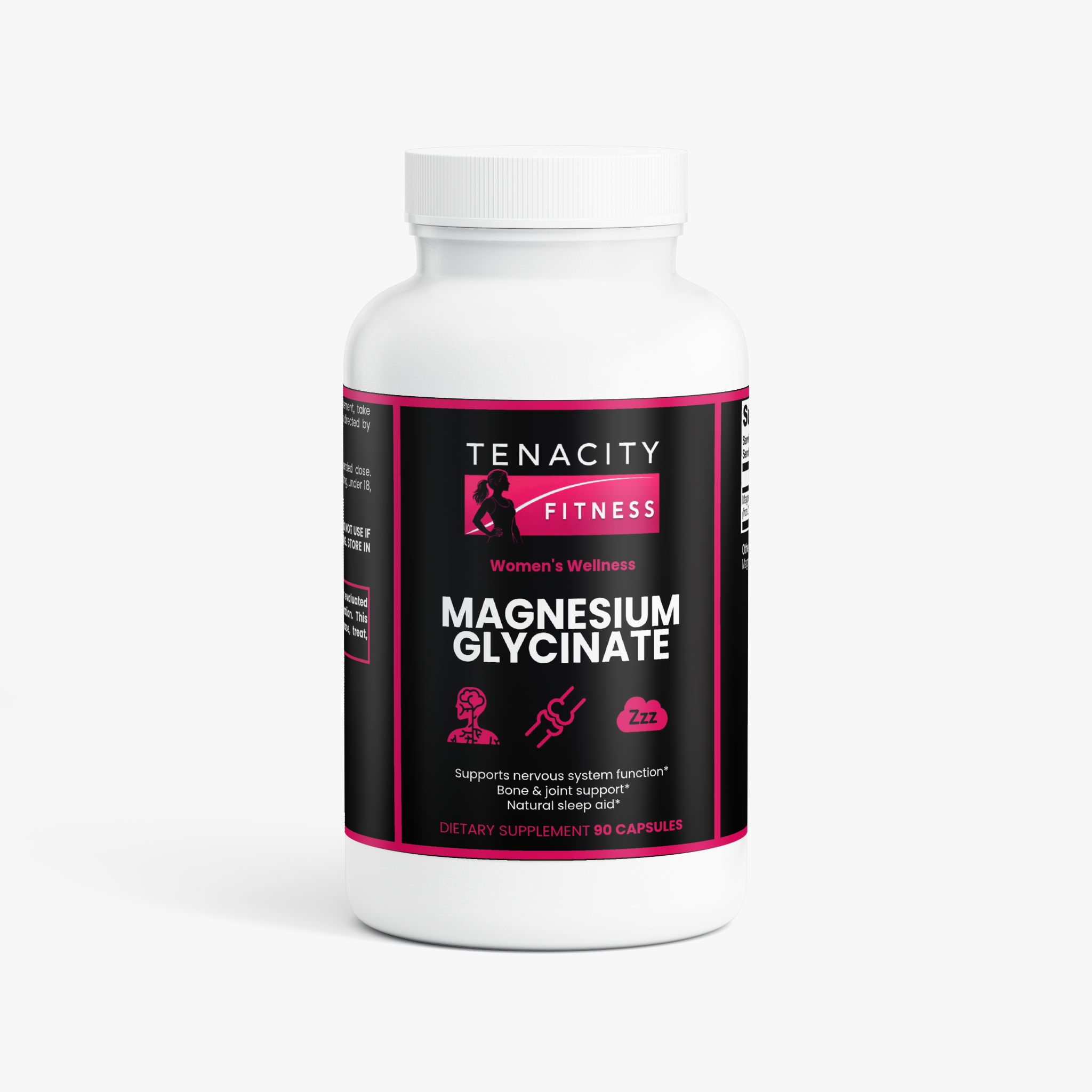
Magnesium and an Active Midlife Lifestyle
If you’re an active woman over 40, I would prioritize this order:
Strength training first.
Nutrition second.
Recovery and sleep.
Supplements where appropriate.
That order matters. But when supplementation is appropriate, it can complement the healthy habits you’re already putting in place. That’s exactly how I believe supplements should be used.
Frequently Asked Questions About Magnesium Glycinate for Women Over 40
What is magnesium glycinate?
Magnesium glycinate is a supplemental form of magnesium in which magnesium is combined with the amino acid glycine.
What does magnesium do in the body?
Magnesium is involved in numerous normal processes, including muscle and nerve function, protein production, blood glucose and blood pressure regulation, energy production and bone development.
Is magnesium glycinate good for women over 40?
Magnesium is an essential nutrient throughout adulthood. Women over 40 may choose magnesium glycinate as a convenient way to supplement their magnesium intake, particularly if their diet does not consistently provide enough.
Is magnesium glycinate good for menopause?
Magnesium is important for normal body function during menopause just as it is during other stages of adulthood. It can be beneficial during menopause but should not be considered a treatment or cure.
Does magnesium glycinate help you sleep?
Research into magnesium supplementation and sleep has produced some promising results, but the evidence remains limited and inconsistent.
Can I take magnesium and omega-3 together?
Magnesium and omega-3 provide completely different nutrients, and many adults include both as part of their nutrition routine.
If you take medication or have a medical condition, speak with your healthcare provider before beginning or combining dietary supplements.
How much magnesium is in Tenacity Fitness Magnesium Glycinate?
Each three-capsule serving provides 275 mg of elemental magnesium from 2,500 mg of magnesium glycinate.
How many capsules should I take?
The suggested use is three capsules once daily, or as directed by a healthcare professional. Always follow the directions on your product label.
How long does one bottle last?
Each bottle contains 90 capsules, equivalent to 30 servings when taken according to the suggested use.
Is Tenacity Fitness Magnesium Glycinate made in the USA?
Yes. Tenacity Fitness Magnesium Glycinate for Women is manufactured in the USA in a cGMP-compliant facility.
Supporting Strength and Healthy Aging From the Inside Out
Midlife health isn’t about chasing youth. It’s about protecting the things that will matter to us for decades. The foundation should always be regular exercise, resistance training, appropriate nutrition, sufficient recovery, good sleep habits and appropriate healthcare.
For women who want to supplement their magnesium intake, Tenacity Fitness Magnesium Glycinate provides 275 mg of elemental magnesium per serving in a straightforward daily formula designed to fit easily into a women’s wellness routine.
Ready to Add Magnesium Glycinate to Your Wellness Routine?
Tenacity Fitness Magnesium Glycinate for Women provides 275 mg of magnesium per serving, with 90 capsules per bottle.
SHOP TENACITY FITNESS MAGNESIUM GLYCINATE FOR WOMEN
Sources & Further Reading
National Institutes of Health, Office of Dietary Supplements — Magnesium Fact Sheet for Health Professionals
NIH provides detailed information on magnesium’s functions, recommended intakes, dietary sources, supplemental intake limits and medication interactions.
National Institutes of Health, Office of Dietary Supplements — Magnesium Fact Sheet for Consumers
Includes information on magnesium’s roles in normal muscle and nerve function, blood pressure regulation, blood glucose regulation and bone health.
Systematic Review — Oral Magnesium Supplementation for Insomnia
Existing clinical research suggests possible effects on some sleep measures, but the evidence was rated low to very low quality, which is why magnesium should not be presented as a proven insomnia treatment.
Important: Dietary supplements should complement, not replace, a varied diet and healthy lifestyle. Consult a healthcare professional before use if you are pregnant or nursing, taking medication or managing a medical condition.
FDA Disclaimer: These statements have not been evaluated by the Food and Drug Administration. This product is not intended to diagnose, treat, cure or prevent any disease.